Table of Contents
If you are starting a skincare brand, launching a makeup line, or running a beauty salon, choosing the right website platform is an important decision.
One question comes up often: Can you sell skincare through Shopify?
The short answer is yes.
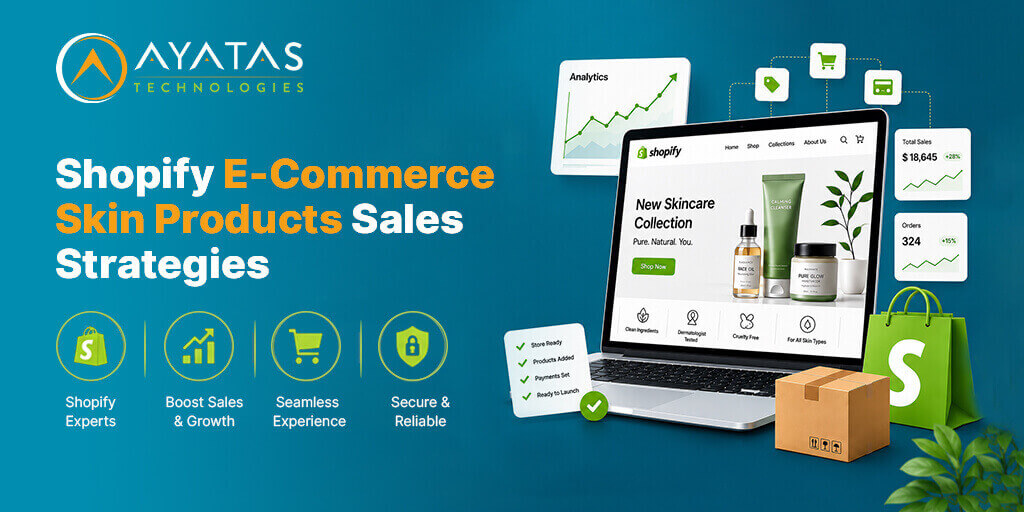
Shopify is built for ecommerce and can be a strong platform for selling skincare, makeup, cosmetics, haircare, beauty products, and other personal care products online. Shopify provides tools for product management, payments, inventory, marketing, shipping, customer accounts, and integrations with social commerce channels.
But there is an important distinction between selling beauty products online and simply building a website for a beauty salon.
In this guide, we will answer your common questions. We will also explain when Shopify makes sense, what features a beauty business should consider, and how to build a Shopify store that is designed to generate sales.
Can I Sell Skincare Through Shopify?
Yes. You can sell skincare products through Shopify.
Whether you are selling facial cleansers, moisturizers, serums, sunscreens, masks, body care products, or a complete skincare collection, Shopify can provide the ecommerce infrastructure needed to sell directly to customers.
Shopify’s own ecommerce resources specifically support cosmetics businesses and highlight features such as mobile-friendly storefronts, product reviews, marketing tools, payment options, shipping, inventory management, and integrations with social platforms.
Why Shopify Works Well for Skincare Brands
Skincare is a highly visual product category. Customers want to see the product, understand the ingredients, learn how to use it, and feel confident before making a purchase.
A well-designed Shopify skincare store can provide:
- High-quality product photography
- Product videos
- Ingredient information
- Product benefits and usage instructions
- Skin-type filters
- Customer reviews
- FAQs
- Related product recommendations
- Subscription or repeat-purchase options
- Discount codes and promotions
- Email marketing integrations
- Social media integrations
- Secure online checkout
For example, instead of simply listing a product as “Vitamin C Serum,” you could organize your store around customer needs:
Shop by Concern
- Acne & Breakouts
- Dry Skin
- Sensitive Skin
- Dark Spots
- Fine Lines
- Dull Skin
This makes it easier for customers to find products that match their needs.
Is It Legal to Sell Skincare Products Online in the U.S.?
Yes, but having a Shopify store does not automatically make your products compliant.
If you sell cosmetics in the United States, you need to pay attention to applicable federal requirements, including cosmetic labeling requirements. The FDA states that cosmetics sold in the U.S. must comply with applicable labeling requirements, including requirements related to product identity, net quantity, and ingredient declarations.
This is especially important if you manufacture your own products or use private-label skincare.
Before launching, review requirements that apply to your specific products, claims, packaging, ingredients, manufacturing process, and business model. Shopify provides the ecommerce platform, but you are responsible for ensuring that your products and claims comply with applicable laws and regulations.
Be particularly careful with claims such as:
- “Treats acne”
- “Cures eczema”
- “Heals skin”
- “Eliminates wrinkles”
Depending on the product and claim, statements can potentially move a product beyond ordinary cosmetic positioning and into other regulatory categories.
For a U.S. beauty brand, compliance should be considered part of the launch strategy—not something to address after the store is live.
Is It a Good Idea to Sell Makeup on Shopify?
Yes, Shopify can be an excellent option for selling makeup online. Makeup is particularly well suited to ecommerce because customers can discover products through social media, search engines, influencers, tutorials, videos, and beauty content.
Shopify specifically supports selling makeup and cosmetics online and provides tools for product catalogs, marketing, payments, fulfillment, and multichannel selling.
What Makeup Brands Can Sell on Shopify
A makeup store could sell products such as:
- Foundation
- Concealer
- Blush
- Bronzer
- Highlighter
- Lipstick
- Lip gloss
- Eyeliner
- Mascara
- Eyeshadow
- Makeup brushes
- Makeup kits
- Beauty accessories
But simply uploading products to Shopify isn’t enough. The real opportunity is to create an ecommerce experience that helps customers make buying decisions.
How to Build a High-Converting Makeup Shopify Store
Makeup shoppers often want to know:
Which shade is right for me?
How will this product look?
How should I use it?
Is it suitable for my skin type?
Your Shopify store should answer these questions before the customer reaches checkout.
1. Use High-Quality Product Photography
Beauty products depend heavily on visuals.
Use:
- Product photos
- Lifestyle images
- Swatches
- Before-and-after imagery where appropriate
- Application demonstrations
- Short product videos
- User-generated content
For makeup, shade representation is particularly important.
2. Create Strong Product Pages
A good product page should explain:
- What the product is
- Who it is for
- Available shades or variations
- Ingredients
- How to use it
- Product size
- Benefits
- Shipping information
- Return policy
- Customer reviews
The goal is to answer the customer’s questions without forcing them to leave the page.
3. Make Product Discovery Easy
Don’t make customers browse through dozens of products to find what they need.
Use filters such as:
- Shop by Product
- Shop by Shade
- Shop by Skin Type
- Shop by Finish
- Shop by Concern
- Best Sellers
- New Arrivals
This can make a large beauty catalog much easier to navigate.
4. Build Around Content
Beauty brands have a major content advantage.
You can create articles, videos, tutorials, and social content around topics such as:
- How to choose the right foundation shade
- Skincare routine for beginners
- Best makeup routine for busy mornings
- How to apply concealer
- Skincare ingredients to know
- Morning vs. nighttime skincare routines
This content can support both SEO and customer education.
Is Shopify Good for Selling Cosmetics?
Yes. Shopify is one of the platforms worth considering for a cosmetics ecommerce business.
The biggest advantage is that Shopify gives businesses a dedicated ecommerce platform rather than requiring them to build the entire commerce infrastructure from scratch.
Shopify’s cosmetics resources highlight capabilities including responsive themes, SEO and blogging tools, payment options, shipping and fulfillment features, apps, and multichannel selling.
Shopify Cosmetics Store Features to Consider
A professional cosmetics store may need:
| Feature | Why It Matters |
|---|---|
| Product collections | Organize large catalogs |
| Product variants | Manage shades, sizes, and options |
| Reviews | Build customer trust |
| Search and filters | Help shoppers find products |
| Wishlist | Encourage future purchases |
| Discount codes | Support promotions |
| Email marketing | Drive repeat purchases |
| Abandoned-cart recovery | Recover potential sales |
| Product recommendations | Increase average order value |
| Social commerce | Reach customers on social platforms |
| Analytics | Understand customer behavior |
| Inventory management | Prevent stock issues |
| Shipping integrations | Simplify fulfillment |
Shopify also has an extensive app ecosystem that can extend store functionality when standard features are not enough.
What About Private-Label Cosmetics?
Shopify can work well for private-label beauty brands.
For example, you might source a product from a manufacturer, create your own branding and packaging, and sell it under your own brand through your Shopify store.
However, the technology platform is only one part of the business.
You also need to consider:
- Product sourcing
- Supplier quality
- Ingredient documentation
- Packaging
- Labeling
- Product testing
- Regulatory requirements
- Insurance
- Inventory
- Shipping
- Customer service
- Returns
- Marketing
Your Shopify development partner can build the ecommerce experience, but product compliance and business operations require separate attention.
Should I Build My Beauty Salon Website on Shopify?
This answer depends on what you want your salon website to do.
If your beauty salon primarily needs a business website with information, services, location, team profiles, gallery, testimonials, and appointment booking, Shopify may not always be the most natural choice.
However, Shopify becomes much more attractive if your salon also wants to sell beauty products online.
Choose Shopify If Your Salon Wants to Sell Products
Imagine a salon that offers:
- Hair services
- Facials
- Makeup services
- Nail services
- Skincare treatments
The salon could also sell:
- Professional skincare
- Haircare products
- Makeup
- Beauty tools
- Gift cards
- Beauty bundles
In this situation, Shopify can provide a strong foundation because the website can combine services and ecommerce.
For example:
Book a Facial
Shop Skincare
Buy a Gift Card
Shop Our Best Sellers
This turns the salon website into more than an online brochure. It becomes a revenue-generating digital storefront.
Shopify vs. a Traditional Salon Website
The right platform depends on your business model.
A Traditional Website May Be Better If:
Your primary goals are:
- Show salon services
- Display prices
- Introduce staff
- Share location and contact information
- Generate appointment inquiries
- Publish blog content
- Build local SEO visibility
In this case, a traditional CMS-based website may provide everything you need without adding ecommerce complexity.
Shopify May Be Better If:
Your business needs:
- Online product sales
- Product catalogs
- Online payments
- Inventory management
- Discounts
- Gift cards
- Product subscriptions
- Customer accounts
- Ecommerce analytics
- Social commerce
- Multiple sales channels
The key question isn’t “Is Shopify good?”
The better question is:
“Does my beauty business need an ecommerce-first website?”
Can a Beauty Salon Use Shopify for Online Booking?
Yes, Shopify can be extended with apps and integrations to support appointment-based businesses.
But if appointment booking is the primary function of the website and you do not plan to sell products, you should compare Shopify with platforms specifically designed around service businesses.
For a salon that wants both appointments and ecommerce, however, Shopify can be a practical option when the store is properly configured.
Shopify for Beauty Brands: What Makes a Store Successful?
A Shopify store doesn’t automatically generate sales.
Your success will depend on the combination of:
Product + Branding + User Experience + SEO + Marketing + Conversion Optimization
- A beautiful website with poor product positioning will struggle.
- A great product with poor photography may struggle.
- A technically strong Shopify store with no traffic will struggle.
- That’s why beauty ecommerce should be approached as a complete digital strategy.
Focus on Mobile Shopping
Beauty customers frequently discover products through social media and mobile devices.
Your Shopify store should therefore be:
- Mobile responsive
- Fast loading
- Easy to navigate
- Easy to search
- Simple to check out
- Designed for touch interactions
Don’t design only for desktop and assume mobile will work automatically.
Build Trust Into Every Page
Beauty products are personal. Customers want confidence before purchasing.
Use trust signals such as:
- Customer reviews
- Authentic product photography
- Clear ingredient information
- Secure checkout messaging
- Shipping information
- Return policies
- Frequently asked questions
- Customer support
- Social proof
The more expensive or specialized the product, the more important this becomes.
SEO for Shopify Beauty and Skincare Stores
If you want customers to discover your products through Google, SEO should be part of your Shopify strategy from the beginning.
Don’t optimize only for broad terms such as “skincare products”. Those keywords can be highly competitive. Instead, build keyword groups around customer intent.
Example Keyword Strategy
Commercial Keywords
- Buy vitamin C serum online
- Buy natural skincare online
- Best moisturizer for dry skin
Product Keywords
- Vitamin C serum
- Retinol cream
- Hyaluronic acid serum
- Facial moisturizer
Problem-Based Keywords
- Skincare for dry skin
- Skincare for sensitive skin
- Products for dark spots
Educational Keywords
- How to build a skincare routine
- How to use vitamin C serum
- When should you apply retinol?
This creates opportunities across the entire customer journey—from discovery to purchase.
Don’t Forget Local SEO for Beauty Salons
If you operate a physical beauty salon, local SEO is just as important as ecommerce SEO.
Your website should target searches such as:
- Beauty salon near me
- Facial near me
- Skincare clinic in [city]
- Makeup artist in [city]
- Beauty salon in [city]
Your Google Business Profile, location pages, reviews, service pages, and local content can all support your visibility in local search.
A salon that combines local services + ecommerce can potentially build two acquisition channels:
Local search → Book an appointment
Organic/product search → Buy a product
That makes the digital strategy more valuable than simply having a basic salon website.
Shopify for Skincare, Makeup, or Cosmetics: Which Business Model Is Right for You?
Here’s a simple way to think about it:
| Business Type | Shopify Fit |
|---|---|
| Online skincare brand | Excellent |
| Makeup ecommerce brand | Excellent |
| Private-label cosmetics | Excellent |
| Beauty product retailer | Excellent |
| Salon selling products | Very good |
| Salon with booking only | Consider alternatives |
| Local salon brochure website | May be unnecessary |
| Beauty brand with large product catalog | Excellent |
| Beauty subscription business | Strong |
| Beauty marketplace | May require custom development |
The platform decision should ultimately follow your business model.
Why Custom Shopify Development Can Matter
A standard Shopify theme can be enough for a new beauty brand. But as your business grows, you may need a more customized experience.
For example, a skincare brand might want:
- Custom product quizzes
- Personalized product recommendations
- Skin-type matching
- Advanced product filters
- Subscription products
- Custom bundles
- Loyalty programs
- Custom landing pages
- Advanced analytics
- ERP or CRM integration
- Custom shipping rules
- Headless commerce
- AI-powered product recommendations
This is where a Shopify development partner can make a significant difference. Instead of forcing your business to work around a generic template, custom development can make the storefront fit your customer journey.
Why Work With a Shopify Development Partner?
Launching a Shopify store is relatively straightforward.
Building a Shopify store that is fast, SEO-friendly, conversion-focused, scalable, and aligned with your brand is a different challenge.
At Ayatas Technologies, we help businesses build and improve Shopify ecommerce experiences around their specific business goals.
Our Shopify services can include:
- Shopify store development
- Shopify theme customization
- Shopify website design
- Shopify migration
- Shopify app integrations
- Custom Shopify development
- Shopify SEO
- Conversion optimization
- Product catalog setup
- Payment and shipping integrations
- Third-party system integrations
- Ongoing Shopify support
For beauty and skincare brands, we can help create an ecommerce experience that combines strong visual branding with practical shopping functionality.
Ready to build a Shopify store for your beauty or skincare brand?
Ayatas Technologies can help you plan, design, develop, optimize, and grow a Shopify ecommerce website built around your business goals.
Talk to our Shopify development team to discuss your project.