Table of Contents
However, returns are not just a cost center—they are also a signal. They reveal gaps in product experience, customer expectations, and operational efficiency. By understanding and addressing these gaps, businesses can significantly reduce ecommerce return rates while improving customer satisfaction.
Understanding the Root Causes of eCommerce Returns
To effectively reduce returns, it is essential first to understand why customers initiate them. In most cases, returns are not random; they are driven by predictable issues such as mismatched expectations, sizing problems, product quality concerns, or delivery failures.
One of the most common causes is the disconnect between what customers expect and what they actually receive. When product descriptions are vague or images are misleading, customers form incorrect assumptions. Similarly, in categories like fashion, incorrect sizing or fit leads to a high return rate. Operational issues such as shipping the wrong item, delayed delivery, or damaged goods also contribute significantly.
By identifying these root causes, businesses can shift from reactive return handling to proactive return prevention.
So, how to actually reduce returns in eCommerce
Below are the top eCommerce return strategies to minimize online shopping product returns
1. Improve eCommerce Product Descriptions and Visual Accuracy
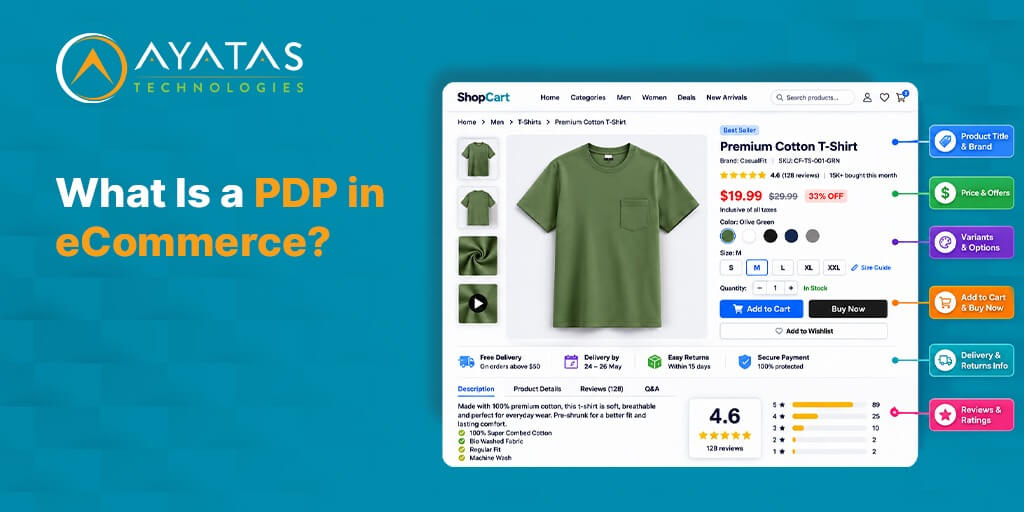
A major portion of returns can be prevented before the purchase even happens. Customers rely entirely on product pages to make decisions, which means those pages must eliminate uncertainty.
Detailed product descriptions play a critical role in setting the right expectations. Instead of generic descriptions, businesses should clearly explain materials, dimensions, usage, and limitations. For example, specifying fabric type, thickness, or real-life use cases can help customers better understand what they are buying.
Visual content is equally important. High-resolution images from multiple angles, zoom functionality, and product videos help customers get closer to an in-store experience. When customers can clearly visualize the product, they are less likely to feel disappointed upon delivery.
2. Solving the Sizing and Fit Problem
Sizing issues are among the leading causes of returns, especially in apparel and footwear. Unlike physical stores, online shoppers cannot try products before purchasing, which increases uncertainty.
To address this, businesses need to go beyond basic size charts. Providing detailed measurement guides, model references, and fit descriptions can help customers make better decisions. For instance, mentioning whether a product runs small, large, or true to size adds valuable context.
Advanced solutions such as AI-powered size recommendation tools and virtual try-ons are becoming increasingly popular. These tools analyze customer data and past purchases to suggest the most accurate size, significantly reducing the likelihood of returns due to poor fit.
3. Leveraging Data to Identify Return Patterns
Data analytics is one of the most powerful tools for reducing returns. Every return contains valuable information about what went wrong, and when aggregated, this data reveals patterns that can guide improvements.
For example, if a particular product consistently shows high return rates due to quality complaints, it may indicate a manufacturing issue. Similarly, if certain customer segments exhibit higher return rates, businesses can adjust their marketing or product recommendations accordingly.
By continuously analyzing return reasons, businesses can identify systemic issues and take corrective action, rather than treating returns as isolated incidents.
4. Enhancing Product Quality and Fulfillment Accuracy
Operational excellence is critical in minimizing returns. Even if a customer makes the right purchase decision, errors during fulfillment can lead to unnecessary returns.
Ensuring strict quality control before shipping helps prevent defective or damaged items from reaching customers. At the same time, accurate picking and packing processes reduce the chances of incorrect items being delivered.
Investing in warehouse management systems, barcode scanning, and automation can significantly improve accuracy and efficiency. When customers receive exactly what they ordered, in perfect condition, the likelihood of returns drops dramatically.
5. Setting Clear Expectations Before Purchase
Transparency is one of the most effective ways to reduce dissatisfaction. Customers should know exactly what to expect from product features, delivery timelines, and the overall experience.
For instance, if a product has specific limitations or requires assembly, this should be clearly communicated upfront. Similarly, realistic delivery timelines help avoid frustration caused by delays.
When businesses set accurate expectations, customers are less likely to feel misled, thereby reducing return rates.
6. Strengthening Pre-Purchase Customer Support
Many returns can be prevented by helping customers make better decisions before they buy. When customers have unanswered questions, they are more likely to make incorrect purchases.
Providing real-time support through live chat, chatbots, or customer service representatives allows businesses to guide customers effectively. For example, assisting with size selection, product comparisons, or feature clarification can significantly reduce uncertainty.
A strong support system not only reduces returns but also enhances the overall ecommerce customer experience.
7. Encourage Exchanges and Reduce Refund Requests
While it may not always be possible to eliminate returns, businesses can minimize their financial impact by encouraging exchanges rather than issuing refunds.
When customers are offered easy exchange options, they are more likely to choose a replacement product than to request a refund. Incentives such as store credit or faster exchange processing can further encourage this behavior.
This approach helps retain revenue while still addressing customer concerns.
8. Designing a Balanced Return Policy
A return policy in eCommerce should strike a balance between customer convenience and business sustainability. While overly strict policies can discourage purchases, overly lenient ones can lead to misuse.
A well-designed policy clearly defines return conditions, timelines, and eligibility criteria. For example, requiring products to be unused and in original packaging helps prevent abuse while still allowing genuine returns.
The key is to create a policy that builds trust without encouraging unnecessary returns.
9. Using Technology to Predict and Prevent Returns
Technology is transforming how businesses manage returns. AI and machine learning tools can predict which orders are likely to be returned based on customer behavior, product type, and historical data.
These insights allow businesses to take preventive measures, such as providing additional information, recommending alternative products, or flagging high-risk transactions.
By using predictive analytics, companies can move from reactive return handling to proactive return prevention.
10. Educating Customers After Purchase
The customer journey does not end after the purchase. In many cases, returns happen because customers do not know how to use or maintain the product properly.
Providing post-purchase guidance through emails, tutorials, or user manuals can significantly reduce this issue. For example, skincare brands often share usage instructions, while electronics companies provide setup guides.
When customers understand how to use a product effectively, they are more likely to be satisfied with their purchase.
11. Reducing Delivery Issues and Logistics Errors
Shipping and delivery play a crucial role in the overall customer experience. Errors such as incorrect addresses, delayed shipments, or damaged packages can lead to unnecessary returns.
Improving logistics operations by verifying addresses, offering real-time tracking, and partnering with reliable carriers can minimize these issues. A smooth delivery experience reinforces customer confidence and reduces the chances of returns.
12. Capturing Return Insights for Continuous Improvement
Every return is an opportunity to learn. Collecting detailed return reasons helps businesses understand what went wrong and how to fix it.
For example, if customers frequently mention that a product looks different in person, it may indicate a need for clearer images or more detailed descriptions. If quality concerns drive returns, it signals the need for supplier or manufacturing improvements.
By continuously learning from returns, businesses can refine their processes and reduce future return rates.
13. Preventing Return Abuse and Fraud
Return abuse is an increasing concern in eCommerce. Some customers exploit flexible return policies by using products temporarily and then returning them.
To address this, businesses can implement fraud detection systems, monitor return behavior, and enforce stricter policies for repeat offenders. While maintaining a customer-friendly approach, it is important to protect the business from misuse.
Frequently Asked Questions
What is a good return rate for eCommerce?
A good return rate depends on the industry, but typically ranges between 15% to 30%. Fashion and apparel tend to have higher return rates, while electronics and home goods usually have lower rates.
How can I reduce returns in online shopping?
You can reduce returns by improving product descriptions, offering accurate sizing guides, using high-quality visuals, optimizing fulfillment accuracy, and leveraging data analytics to identify return patterns.
Why do customers return products in eCommerce?
Customers usually return products due to incorrect sizing, mismatched expectations, poor product quality, damaged delivery, or receiving the wrong item.
Does a strict return policy reduce returns?
A balanced return policy can reduce unnecessary returns, but overly strict policies may hurt conversions. The key is to create clear and fair guidelines.
How does AI help reduce eCommerce returns?
AI helps by predicting return risks, recommending better product matches, and analyzing customer behavior to prevent incorrect purchases.
Conclusion
Reducing returns in eCommerce is not about limiting customer freedom—it is about improving the entire shopping experience. When customers receive exactly what they expect, returns naturally decrease. The most successful eCommerce brands focus on clarity, quality, and data-driven decision-making. They invest in better product content, smarter technology, and efficient operations to create a seamless buying journey.
Ultimately, reducing returns leads to more than just cost savings. It strengthens customer trust, improves brand reputation, and drives long-term growth.